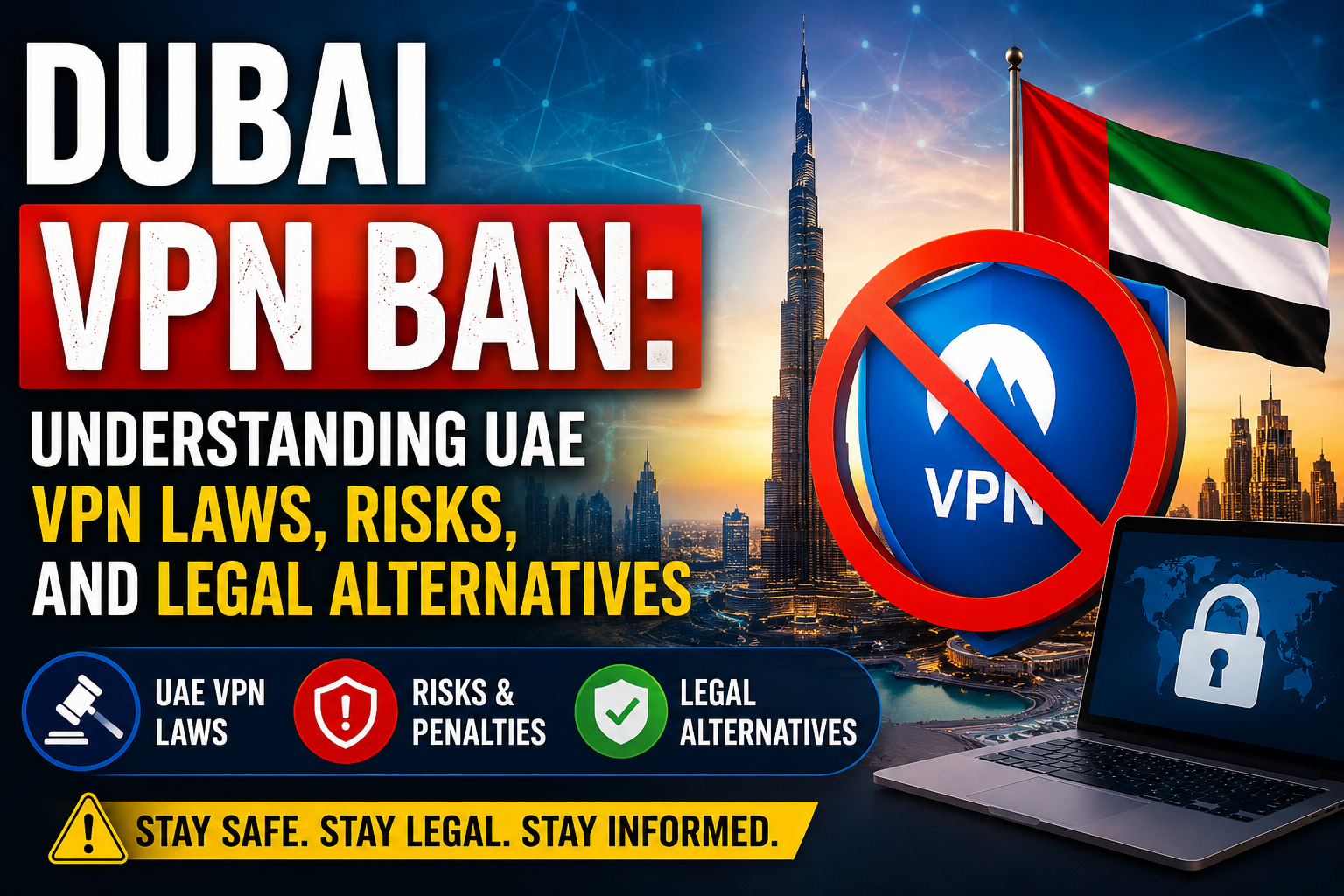
The United Arab Emirates (UAE), particularly Dubai, is known for its advanced digital infrastructure, smart government services, and strict cybersecurity regulations. Over the years, many internet users have searched for information about the so-called “Dubai VPN Ban” and whether Virtual Private Networks (VPNs) are legal in the UAE.
VPN Fine Checker
Check whether your name appears in the VPN Fine List.
Enter your details above to verify whether your name appears in the VPN fine list.
This article explains the current situation regarding VPN usage in Dubai, potential penalties, legal considerations, and safer alternatives for internet privacy.
What Is a VPN?
A Virtual Private Network (VPN) is a technology that encrypts internet traffic and routes it through secure servers located in different countries. VPNs are commonly used for:
- Protecting online privacy
- Securing public Wi-Fi connections
- Accessing corporate networks remotely
- Encrypting internet communications
- Preventing unauthorized tracking
Millions of users worldwide rely on VPN services for cybersecurity and data protection purposes.
Is VPN Completely Banned in Dubai?
One of the most common misconceptions is that VPNs are completely banned in Dubai and throughout the UAE. In reality, VPN technology itself is not automatically illegal.
Many businesses, government agencies, multinational corporations, and remote workers use VPN solutions for legitimate security purposes. VPNs play an important role in protecting sensitive information and enabling secure communication between offices and employees.
However, problems arise when VPNs are used to bypass laws, conceal illegal activities, or access services in ways that violate UAE regulations.
UAE Cybercrime Regulations
The UAE has implemented strict cybercrime laws designed to protect national security, digital infrastructure, businesses, and residents.
Authorities may take action against individuals who use technological tools, including VPNs, to:
- Commit online fraud
- Circumvent legal restrictions
- Access prohibited services illegally
- Hide criminal activities
- Engage in cybercrime
Because of these regulations, residents should be careful about how and why they use VPN technology.
Why Do People Use VPNs in Dubai?
There are several legitimate reasons why residents and businesses use VPN services:
1. Corporate Security
Companies often require employees to connect through encrypted VPN networks when accessing internal systems remotely.
2. Privacy Protection
VPNs help protect personal data from cybercriminals, especially when using public Wi-Fi networks in airports, hotels, and cafes.
3. Remote Work
Remote workers frequently rely on VPNs to securely connect to company servers and business applications.
4. Data Encryption
VPNs provide an additional layer of security that helps prevent unauthorized monitoring of internet traffic.
Risks of Misusing VPN Services
Although VPN technology itself has legitimate uses, misuse can create legal complications.
Potential risks include:
- Violating local regulations
- Breaching service agreements
- Participating in unauthorized online activities
- Concealing fraudulent behavior
- Accessing restricted content unlawfully
Residents should always ensure that their internet activities comply with UAE laws regardless of whether a VPN is being used.
How UAE Authorities Approach Cybersecurity
The UAE is recognized as one of the most technologically advanced countries in the Middle East. Significant investments have been made in:
- Artificial Intelligence (AI)
- Smart city infrastructure
- Digital government services
- Financial technology
- Cybersecurity systems
As part of these efforts, authorities actively monitor and combat cybercrime, phishing attacks, online fraud, and digital security threats.
This approach is intended to create a safer online environment for residents, tourists, and businesses operating within the country.
Legal Alternatives for Online Privacy
Individuals seeking additional online privacy can consider several legal options:
Use Secure Websites
Always access websites that use HTTPS encryption.
Enable Two-Factor Authentication
Two-factor authentication provides extra account protection.
Keep Software Updated
Regular updates help eliminate security vulnerabilities.
Use Strong Passwords
Unique passwords reduce the risk of account compromise.
Utilize Business VPN Solutions
Organizations can implement approved corporate VPN systems for secure communications.
Impact on Businesses
Dubai is a major global business hub attracting investors, entrepreneurs, and multinational corporations from around the world.
Secure communication is critical for:
- Banking institutions
- Financial services
- Healthcare providers
- Government agencies
- Technology companies
For this reason, secure networking technologies, including enterprise VPN systems, remain important tools for professional operations.
The Future of Internet Security in Dubai
As Dubai continues its transformation into a global smart city, cybersecurity will remain a major priority.
Future developments are expected to include:
- Enhanced digital identity systems
- Advanced cybercrime prevention
- Stronger data protection frameworks
- Improved online privacy technologies
- Greater public awareness of cybersecurity risks
Residents and businesses will benefit from increased security while continuing to enjoy access to innovative digital services.
Conclusion
The phrase “Dubai VPN Ban” often creates confusion. VPN technology itself has many legitimate uses, including cybersecurity, remote work, and privacy protection. However, internet users must always ensure that their activities comply with UAE laws and regulations.
Dubai continues to balance technological innovation with strong cybersecurity measures. Understanding local regulations, using secure online practices, and respecting legal requirements are the best ways to maintain a safe and responsible digital presence in the UAE.
Whether you are a resident, business owner, remote worker, or visitor, staying informed about cybersecurity laws can help you navigate the digital landscape confidently and securely.
